About
Between the two harbours
The district in brief
El Gomrok is one of Alexandria’s oldest districts, at the tip of the old city between the Eastern and Western Harbours, and takes its name from the port’s old customs house (gomrok). Its southern edge is Khedive Street, from Salah El Din Street to Asakel El Ghilal; its eastern edge is Salah El Din Street, the line of El Asqofeya and Ibrahim El Khattat Streets, up to the old stock exchange on 26 July Road; the port wall lies to its west and the sea to its north, as the district’s document, published by Alexandria Governorate, sets it.
The district holds three residential qisms and 35 shiakhas: El Gomrok with nineteen, among them Ras El Tin, El Sayala, El Mazar and Souq El Samak; El Manshiya with four; and El Labban with twelve, among them El Warsha, El Geneina and El Sekka El Gedida. The district also takes in the port qism, the customs zone of Alexandria’s harbour with its six zones, which has no shiakhas and no residents.1
The district covers 4.7 km², according to its map page on the Alexandria Governorate portal.
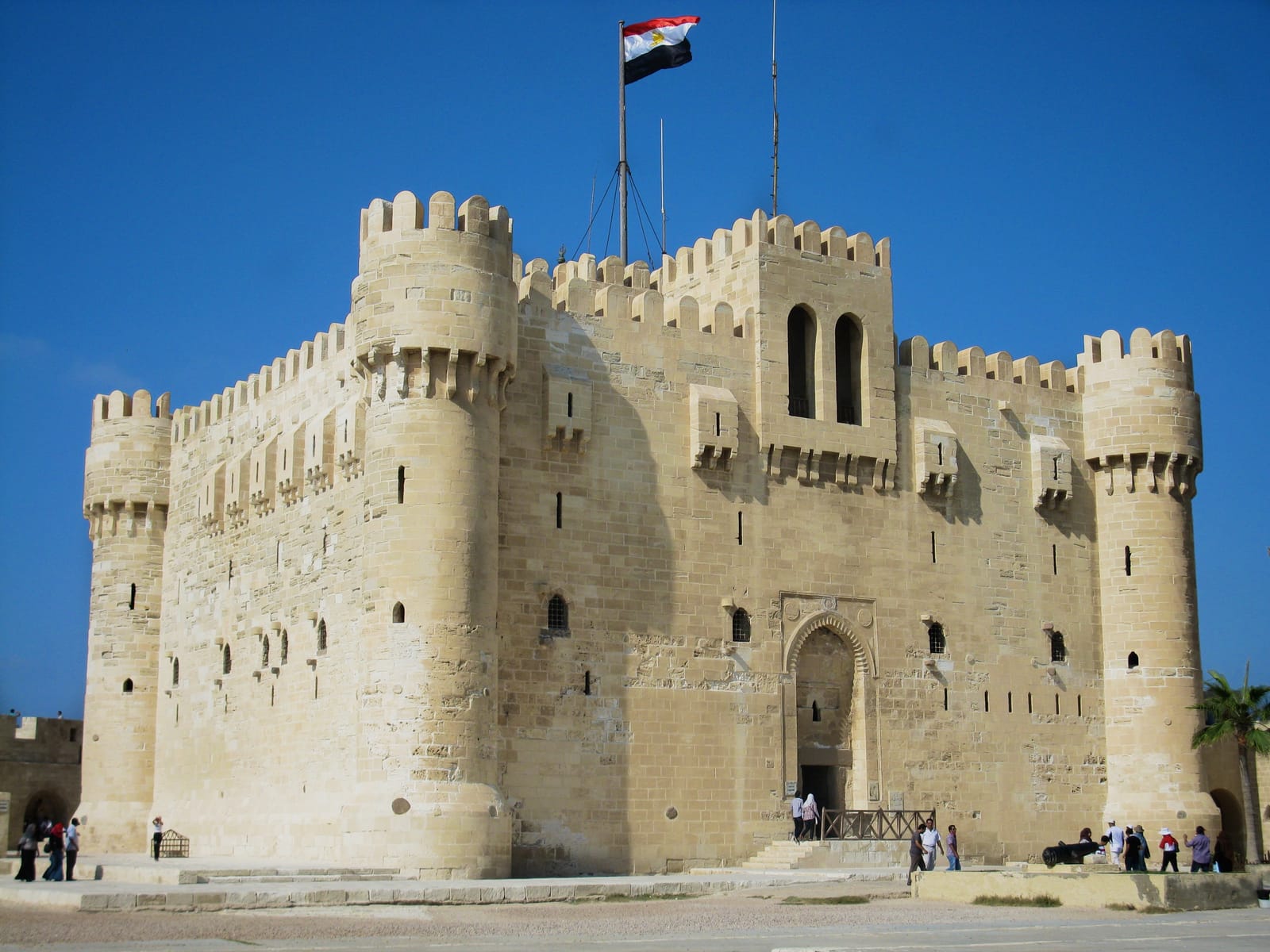
The district headquarters stands on Ras El Tin Palace Street, next to the fish market, and its technology citizen service centre takes residents’ requests; call the district on 03 4844029 to confirm before you visit. Within the district are Qaitbay Citadel, the Mosque of Abu al-Abbas al-Mursi and the Mosques Square, the Anfoushi tombs, Ras El Tin Palace and Kom El Nadura.
The district in numbers
35
Shiakhas
3
Residential qisms
6
Zones in the port qism
The qisms, shiakhas and port zones as in the district’s boundary document1
The district at a glance
Our vision for clearer services, protected heritage and a district that welcomes residents and visitors.
A safe, orderly district where every resident gets their service easily and clearly, and which keeps Qaitbay Citadel, the mosques of Bahari, the Anfoushi tombs and a Corniche open to all.
Administrative sections
Three residential qisms, El Gomrok, El Manshiya and El Labban, holding 35 shiakhas between them. The district also takes in the port qism, the customs zone of Alexandria’s harbour with its six zones, which has no shiakhas and no residents.
El Gomrok
الجمرك
Its nineteen shiakhas: Abu Shousha, El Baraka, El Baqtareya, El Tamrazeya, El Haggari, El Halawgi, El Sayala 1, El Sayala 2, El Shamarli, El Sayadin, El Mazar, El Maghawri, Madwara, Ras El Tin, Zawiyet El Qabbaneya, Zawiyet Khattab, Souq El Samak, Safar Pasha, Qabw El Mallah1
- Population, estimate for 20172
- 92,549
El Manshiya
المنشية
Its four shiakhas: El Manshiya El Kobra, El Hamamil, Souq El Barsim, Souq El Turk1
- Population, estimate for 20172
- 23,501
El Labban
اللبان
Its twelve shiakhas: El Warsha, El Geneina El Soghra, El Geneina El Kobra, El Takhsheiba, El Sekka El Gedida, El Sabboura, El Nagaa El Qadim, El Nagaa El Gedid, Geneinet El Ayouni, El Farahda, Souq El Gomaa, Meshmesh El Basal1
- Population, estimate for 20172
- 41,126
Population figures are CAPMAS’s estimates, per qism, and are not added into one total.
Timeline
The Anfoushi tombs
The Ptolemaic and early Roman periods
The Anfoushi tombs were cut into the rock in the form of an ancient Egyptian house; some were reused in the Roman period, and their decoration blends Pharaonic, Greek and Roman art.
Kom El Nadura
The Fatimid period
The archaeological hill of Kom El Nadura, in El Labban, goes back to the Fatimid period; under Mohamed Ali an observatory was built on it to guide ships.
Abu al-Abbas al-Mursi
The 13th century
Sheikh Abu al-Abbas al-Mursi, born in al-Andalus, lived most of his life in Alexandria; the mosque that bears his name, in the Andalusian style, stands over his tomb on the Mosques Square.
Qaitbay Citadel
1477 to 1479
The Mamluk sultan al-Ashraf Abu al-Nasr Qaitbay built his citadel between 882 and 884 AH (1477 to 1479) over the ruins of the Lighthouse of Alexandria.
Terbana Mosque
1685
Hajj Ibrahim Terbana built the mosque named after him in 1097 AH (1685); its ground floor holds shops.
Ras El Tin Palace
1834
Mohamed Ali began building Ras El Tin Palace in 1834; King Farouk left Egypt from the Ras El Tin harbour aboard the yacht El Mahrousa.
The tombs found
1901
The Anfoushi tombs, five in all, were found in 1901.
The marine institute
1918
The institute beside Qaitbay Citadel was founded in 1918 to study the life of Egypt’s seas and lakes; its museum holds a rare collection of preserved and living fish and other sea life.
The memorial
1933
Alexandria’s Italian community built the monument at El Manshiya in 1933 to honour Khedive Ismail; in the 1960s it became the memorial to the naval Unknown Soldier.
The shiakhas’ boundaries
2016
In January 2016 Alexandria Governorate published El Gomrok District’s document: its four qisms, its 35 shiakhas and the limits of each.
Our priorities
Four commitments that govern the district’s day-to-day decisions.
Automated, understandable service
Residents should know the documents their service needs before they visit the technology centre, and find reconciliation files, licences and complaints handled in one place.
Safe buildings
Following up old buildings at risk of collapse in Bahari, El Manshiya and El Labban, carrying out demolition and restoration orders, and moving residents out when danger is imminent.
An orderly Corniche and streets
Clearing the Corniche of encroachments so residents can enjoy the sea, and clearing markets and squares, from Souq El Midan to Orabi and Tahrir Squares in El Manshiya.
An open door for residents
Receiving residents at the technology centre every Tuesday, and taking part in the governor’s public meeting for the western sector in the third week of each month.